
The Importance of Landing Mechanics in Sports: Preventing Injuries with Proper Technique and Supportive Footwear
July 2, 2026
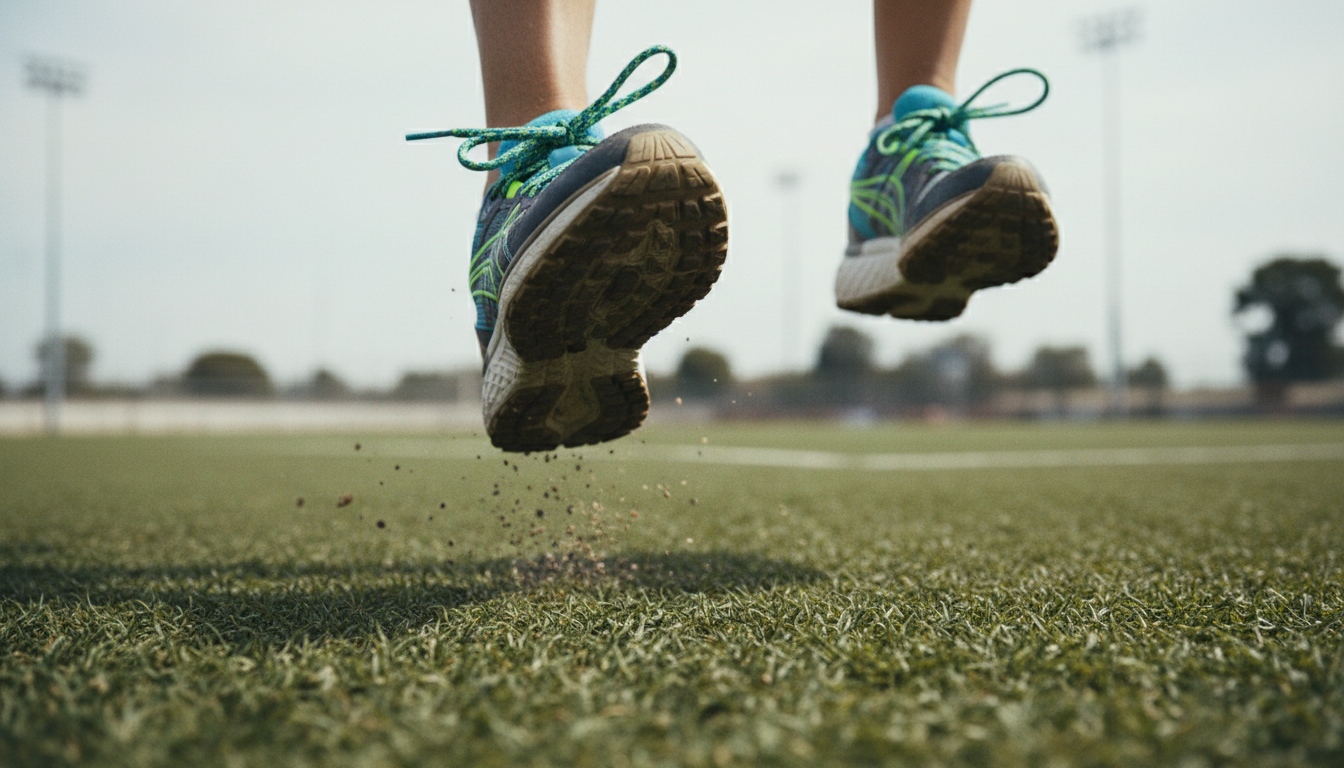
Every athlete, from weekend warriors to professional competitors, experiences countless landings during their sports activities. Whether you’re spiking a volleyball, completing a soccer tackle, or finishing a rally in pickleball, the way your body absorbs impact determines not only your performance but also your long-term joint health. Poor landing mechanics contribute to a significant percentage of sports injuries, placing excessive stress on feet, ankles, knees, and hips. Understanding and implementing proper landing techniques is essential for anyone looking to stay active, reduce injury risk, and maintain optimal foot health.
The biomechanics of landing involve complex interactions between multiple joints, muscles, and connective tissues. When executed correctly, these movements distribute forces evenly throughout the body. When performed improperly, however, they can lead to acute injuries like sprains and fractures, or chronic conditions such as plantar fasciitis, neuropathy, and persistent joint pain. This comprehensive guide explores the critical importance of landing mechanics and how combining proper technique with appropriate footwear can transform your athletic performance while protecting your body from preventable injuries.
Understanding the Biomechanics of Landing in Sports
Landing mechanics refer to the coordinated movement patterns your body uses to absorb and dissipate the forces generated when your feet contact the ground. During a typical athletic landing, your body can experience impact forces ranging from two to seven times your body weight, depending on the height and speed of your movement. These forces travel through a kinetic chain starting at your feet and progressing upward through your ankles, knees, hips, and spine.
Proper landing technique involves several key components working in harmony. Your feet should make contact with the ground with a slight forward lean, allowing your ankle, knee, and hip joints to flex simultaneously. This triple flexion pattern acts like a series of shock absorbers, progressively reducing the impact force at each joint level. The muscles surrounding these joints must activate at precisely the right moments to control the descent and prevent excessive motion that could damage ligaments or cartilage.
When landing mechanics break down, certain structures bear disproportionate loads. Stiff-legged landings, for example, transfer excessive force directly to the knees and lower back. Landing with the knees caving inward places dangerous stress on the ACL and medial knee structures. Forefoot-dominant landings without adequate arch support can overload the plantar fascia, leading to inflammation and chronic heel pain. These mechanical faults explain why so many athletes struggle with recurring injuries despite adequate rest and treatment.
Common Landing Errors That Lead to Soccer Injuries and Other Sports Trauma
Soccer injuries frequently result from improper landing mechanics during jumping headers, tackles, and rapid directional changes. Soccer sports injuries often involve the lower extremities, with ankle sprains, knee ligament tears, and foot stress fractures topping the list. Many of these injuries share a common root cause: athletes landing with poor joint alignment or inadequate muscular control.
Several landing errors appear repeatedly across different sports. Understanding these patterns helps athletes and coaches identify risk factors before injuries occur:
- Asymmetrical landings: Favoring one leg over the other creates imbalanced force distribution and increases injury risk on the dominant side
- Excessive knee valgus: When knees collapse inward during landing, the ACL experiences dangerous rotational and shearing forces
- Insufficient hip and knee flexion: Landing with relatively straight legs prevents proper shock absorption and transfers impact directly to joints
- Early heel contact: Striking the ground heel-first with a locked ankle sends jarring forces up the kinetic chain
- Inadequate core stability: Without proper trunk control, landing forces cannot be effectively managed by the larger muscle groups
- Poor foot positioning: Landing with feet too narrow, too wide, or rotated excessively compromises balance and joint alignment
In pickleball, for instance, a rally ends when one team faults in pickleball, but many players sustain injuries not during the point itself but during the aggressive movements and sudden stops that characterize competitive play. The repetitive landing stresses in court sports accumulate over time, making proper mechanics essential for longevity in these activities.
The Connection Between Landing Mechanics and Foot Conditions
The feet serve as the foundation for all landing mechanics, and chronic foot conditions both result from and contribute to poor landing patterns. Plantar fasciitis, one of the most common athletic foot problems, develops when the thick band of tissue connecting the heel to the toes becomes inflamed from excessive stress. Athletes with inadequate landing control often experience repetitive overstretching of this fascia during impact, creating microtears that accumulate into painful inflammation.
Finding the best shoe for plantar fasciitis becomes crucial for athletes dealing with this condition. The right footwear provides structured arch support that helps maintain the foot’s natural alignment during landing, reducing strain on the plantar fascia. Similarly, shoes for neuropathy offer cushioning and protection for athletes experiencing nerve-related foot pain, which can be aggravated by repetitive impact forces.
Men who participate in high-impact sports often need specialized footwear to address their biomechanical needs. Shoes for plantar fasciitis men typically feature firmer midsoles and more substantial heel counters to accommodate higher body weights and ground reaction forces. Whether you’re searching for plantar fasciitis shoes for men or general sneakers for plantar fasciitis, the key features remain consistent: adequate arch support, cushioned heel areas, and stable platforms that promote proper foot alignment during landing.
Athletes experiencing general discomfort should consider supportive shoes for foot pain that address multiple pressure points simultaneously. The best arch support shoes for plantar fasciitis distribute landing forces across the entire foot structure rather than concentrating stress in vulnerable areas. For those with specific forefoot issues, comfortable shoes for toe pain provide additional padding in the toe box while maintaining the structural integrity needed for athletic movements.
Step-by-Step Guide to Improving Your Landing Technique
Developing proper landing mechanics requires conscious practice and progressive skill development. Athletes should approach landing technique with the same dedication they apply to other fundamental skills. Follow these steps to build safer, more effective landing patterns:
- Master the static position: Begin by practicing the proper landing position without actual jumping. Stand with feet shoulder-width apart, knees slightly bent, hips back, and weight distributed evenly across your feet. Your knees should track over your toes without caving inward.
- Practice low-height landings: Start with small box steps or minimal jumps to rehearse the movement pattern without excessive force. Focus on landing softly with simultaneous ankle, knee, and hip flexion. Listen for noise—loud landings indicate poor shock absorption.
- Develop single-leg stability: Many sports injuries occur during asymmetrical landings. Practice single-leg landing drills to build strength and control in each leg independently. This preparation helps when you inevitably land off-balance during competition.
- Increase height gradually: As your technique improves, progressively increase jump height while maintaining proper form. Never sacrifice landing quality for height or distance. If your mechanics deteriorate, return to lower-intensity drills.
- Add sport-specific contexts: Once basic patterns are established, incorporate landings into sport-specific movements. Soccer players might practice landing after headers, while pickleball players can work on landings after overhead smashes.
- Record and analyze your technique: Video analysis reveals subtle mechanical flaws invisible during performance. Regular recording sessions help track progress and identify persistent issues requiring additional attention.
- Strengthen supporting muscle groups: Complement technique work with exercises targeting the glutes, quadriceps, hamstrings, and calf muscles. Stronger muscles provide better joint control during landing impact.
The Role of Proper Footwear and Insoles in Landing Mechanics
Even perfect landing technique cannot fully compensate for inadequate footwear. The shoes you wear during athletic activity directly influence how forces transfer through your feet and up the kinetic chain. Worn-out shoes with compressed midsoles lose their shock-absorbing capabilities, effectively increasing impact forces on your joints with every landing. Sport-specific shoes provide structural features aligned with the movement demands of particular activities.
Beyond selecting appropriate athletic shoes, many athletes benefit significantly from specialized insoles that enhance shock absorption and support. Quality insoles transform standard athletic footwear into customized performance equipment tailored to your biomechanical needs. They provide additional cushioning exactly where your landing pattern creates the most stress, while supporting your arch throughout the impact phase.
For athletes experiencing foot pain, joint discomfort, or recovering from conditions like plantar fasciitis, upgrading your insole system can make an immediate difference in comfort and performance. Consider exploring shock-absorbing sport insoles with advanced cushioning technology designed specifically to reduce landing impact forces and provide targeted support for common athletic foot conditions. These specialized insoles work synergistically with proper landing mechanics to minimize stress on your feet, ankles, and knees during high-impact activities.
Preventing Long-Term Consequences of Poor Landing Mechanics
The cumulative effects of improper landing technique extend far beyond immediate injury risk. Repeated exposure to excessive impact forces accelerates joint degeneration, potentially leading to early-onset osteoarthritis in the ankles, knees, and hips. Athletes who ignore landing mechanics in their youth often face chronic pain and limited mobility in their later years, long after their competitive careers have ended.
Plantar fasciitis represents one of the most common long-term consequences of poor landing control. This condition can become chronic if the underlying mechanical issues remain unaddressed. Athletes experiencing persistent heel pain should evaluate both their landing technique and their footwear choices, as addressing only one factor rarely resolves the problem completely. The combination of proper mechanics and supportive footwear creates a comprehensive approach to foot health.
Neuropathy and nerve-related foot problems can also develop from repetitive impact trauma. Each poorly controlled landing sends shock waves through the small bones and soft tissues of the feet, potentially damaging the delicate nerve structures over time. Protective footwear and refined landing technique work together to minimize these damaging vibrations and preserve nerve function throughout your athletic career.
Integrating Landing Mechanics Training Into Your Routine
Improving landing mechanics doesn’t require extensive additional training time. Athletes can integrate landing drills into their existing warm-up routines, skill practice sessions, and strength training programs. Even five to ten minutes of focused landing practice before each training session produces measurable improvements in technique and reduces injury rates significantly.
Coaches should emphasize landing quality during all jumping and plyometric exercises. Rather than counting repetitions as the primary metric, athletes should focus on executing each landing with optimal technique. This quality-focused approach develops movement patterns that transfer automatically into competitive situations, where conscious thought about mechanics becomes impossible.
Youth athletes particularly benefit from early landing mechanics education. Developing proper patterns during childhood and adolescence establishes foundations that last throughout an athletic career. Young athletes’ nervous systems are highly adaptable, making this developmental window ideal for motor learning. Parents and coaches who prioritize movement quality over immediate performance outcomes invest in long-term athletic development and injury prevention.
Conclusion: Landing Mechanics as a Foundation for Athletic Longevity
The importance of proper landing mechanics in sports cannot be overstated. Every landing represents an opportunity to either strengthen your body’s resilience or accumulate microscopic damage that eventually manifests as injury. Athletes who master landing technique gain competitive advantages through improved force absorption, faster transition times, and reduced injury risk that keeps them in competition while others sit on the sidelines.
Addressing landing mechanics requires a comprehensive approach combining technical skill development, appropriate footwear, and targeted strength training. Whether you’re concerned about soccer injuries, dealing with plantar fasciitis, or simply looking to extend your athletic career, refined landing patterns provide benefits that compound over time. The feet serve as your foundation for all athletic movement, and protecting them through proper mechanics and supportive footwear pays dividends in performance and longevity.
Take action today to evaluate and improve your landing technique. Record yourself during training, seek feedback from qualified coaches, and invest in footwear and insoles that support your biomechanical needs. Your joints, feet, and future athletic self will thank you for the attention you dedicate to this fundamental but often overlooked aspect of sports performance. Remember that every landing is a repetition—make sure you’re practicing the patterns that build strength and resilience rather than accumulating damage that leads to chronic pain and limited mobility.