
Standing All Day vs. Walking All Day: Which Is Harder on Your Feet and How Insoles Can Help
February 16, 2026
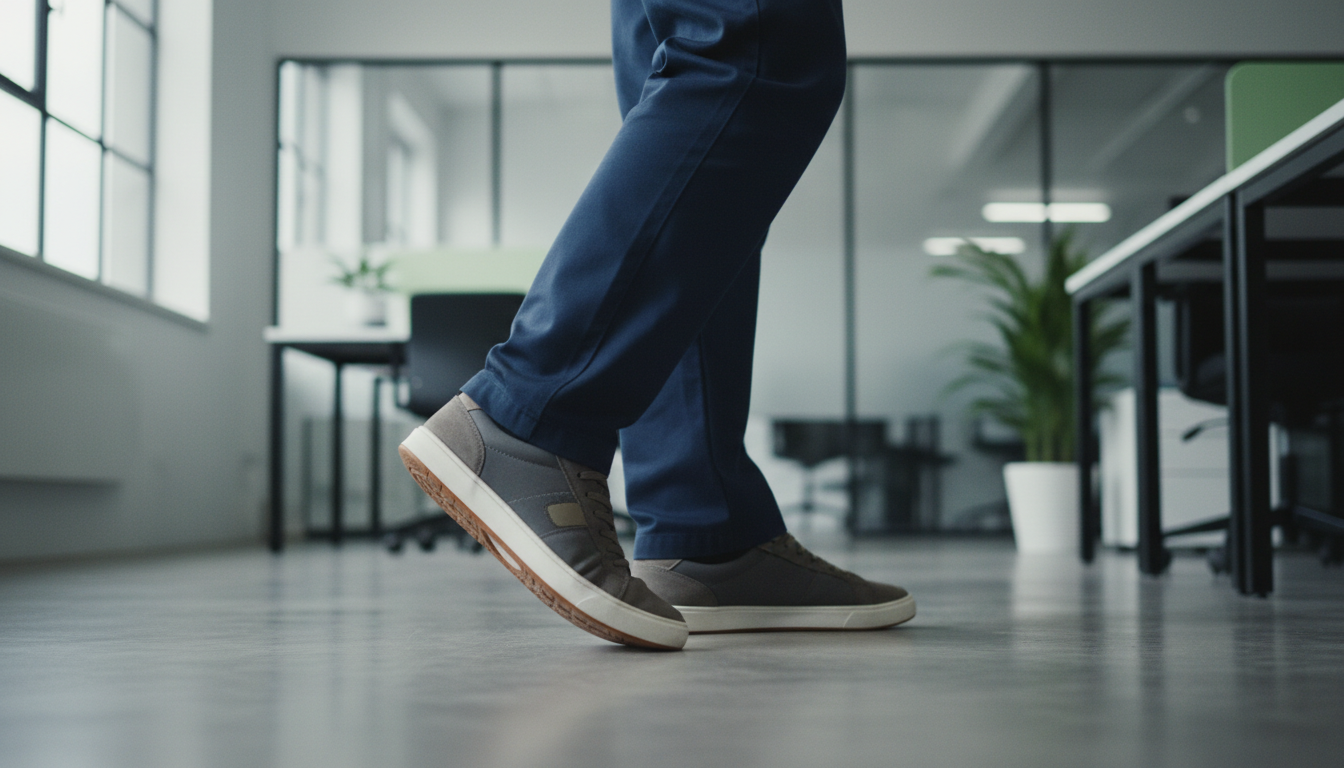
For millions of men working in construction, warehousing, healthcare, retail, and other industries requiring long hours on their feet, a common debate arises: is it harder to stand all day or walk all day? The answer impacts not only daily comfort but long-term foot health. Whether you’re a construction worker standing on concrete for hours or a retail worker constantly moving across the sales floor, understanding how different work patterns affect your feet is essential for preventing pain and injury.
This comprehensive guide examines the physiological impacts of prolonged standing versus walking, exploring which puts more strain on your feet and how specialized solutions like work boot insoles for men can provide relief. By understanding these differences, you can make informed decisions about foot care and potentially transform your workday experience.
The Biomechanics of Standing: What Happens to Your Feet When You Don’t Move
When you stand statically in one position, your body weight creates constant pressure on the same areas of your feet. Unlike walking, which distributes pressure across different parts of the foot in a cyclical pattern, standing concentrates force on specific regions without relief.
This static loading has several physiological consequences:
- Blood pools in the lower extremities as the muscular pump that normally helps return blood to the heart during walking becomes inactive
- The plantar fascia (the thick band of tissue that runs across the bottom of your foot) remains under constant tension
- Specific pressure points, especially in the heel and forefoot, bear continuous load
- Muscles fatigue faster as they contract isometrically without the relief of relaxation phases
- Joint cartilage receives less nutrient circulation due to reduced movement
Research shows that prolonged static standing can lead to plantar fasciitis, fallen arches, and even contribute to the formation of varicose veins. For men in industries like security, manufacturing, or assembly line work where standing in place is common, these risks are particularly relevant and often necessitate supportive boot insoles for men.
The Biomechanics of Walking: How Movement Changes the Equation
Walking creates a different pattern of stress on the feet. Rather than constant pressure in the same spots, walking generates a rolling motion from heel strike to toe-off, distributing force across the entire foot in a sequence. This cyclical loading and unloading has significant benefits but also creates its own challenges.
The biomechanical effects of prolonged walking include:
- Improved blood circulation as muscle contractions help pump blood back to the heart
- More even distribution of pressure across the foot throughout the gait cycle
- Dynamic engagement of different muscle groups that alternately contract and relax
- Increased impact forces, especially during heel strike
- Greater overall distance covered by foot structures, potentially leading to friction and blisters
Men who work in postal delivery, retail, hospitality, or similar roles that involve continuous walking face unique challenges. While they benefit from improved circulation, they also experience repetitive impact forces that accumulate over time. Many find that high-quality shoe inserts for men designed for dynamic movement can significantly reduce fatigue and discomfort.
The Verdict: Is Standing or Walking Harder on Your Feet?
Based on scientific research and podiatric consensus, prolonged static standing is generally considered more damaging to foot health than walking. A 2023 study published in the Journal of Occupational Health found that workers who primarily stood still reported 38% more foot pain than those who walked regularly throughout their shifts.
However, this doesn’t mean walking is entirely benign. The truth is more nuanced:
Standing is typically harder on your feet when:
- You remain in exactly the same position for extended periods
- You stand on hard, unforgiving surfaces like concrete
- You have existing conditions like plantar fasciitis or flat feet
- Your footwear lacks proper arch support or cushioning
Walking can be harder on your feet when:
- You cover very long distances (typically over 15,000 steps daily)
- Your gait mechanics are abnormal (overpronation or supination)
- You wear inappropriate footwear for your activity level
- You’re carrying additional weight or equipment
The ideal scenario involves a mix of both standing and walking, allowing for varied positions and movement patterns that prevent any single foot structure from being overloaded. When this isn’t possible due to job requirements, supportive insoles for men become an essential tool for maintaining foot health.
Common Foot Problems Developed from Standing vs. Walking All Day
Both prolonged standing and walking can lead to specific foot conditions, though the prevalence and mechanisms differ between the two activities.
Common issues from static standing include:
- Plantar fasciitis: Inflammation of the thick band of tissue that runs across the bottom of your foot
- Metatarsalgia: Pain and inflammation in the ball of the foot
- Collapsed arches: Gradual flattening of the foot’s natural arch
- Achilles tendonitis: Inflammation of the tendon connecting calf muscles to the heel
- Varicose veins: Enlarged, twisted veins resulting from poor circulation
Common issues from excessive walking include:
- Stress fractures: Tiny cracks in bone from repetitive force
- Blisters and calluses: Skin irritations from friction
- Morton’s neuroma: Thickening of tissue around nerves leading to toes
- Extensor tendonitis: Inflammation of tendons on the top of the foot
- Runner’s knee: Pain around the kneecap from biomechanical issues starting in the foot
For men in physically demanding professions, addressing these issues often requires specialized insoles for men work boots that are designed to mitigate these specific risk factors.
The Impact of Surface Type on Foot Fatigue
The surface you stand or walk on significantly influences foot fatigue and injury risk. Different flooring materials have varying degrees of shock absorption and impact on foot mechanics.
From most to least foot-friendly, common work surfaces include:
- Anti-fatigue mats (specifically designed to reduce standing fatigue)
- Wood flooring (offers natural give and elasticity)
- Carpeted surfaces (provides moderate cushioning)
- Asphalt (moderate hardness with some give)
- Tile and linoleum (hard with minimal shock absorption)
- Concrete (extremely hard with almost no shock absorption)
Men working in construction, warehousing, or manufacturing environments often face the harshest conditions, standing on concrete for 8-12 hours daily. In these situations, proper work boot insoles for men become particularly crucial, as they can compensate for the lack of shock absorption in the floor surface.
A 2024 industrial safety study found that workers using high-quality boot insoles for men on concrete floors reported 42% less foot pain and 37% less lower back pain compared to those wearing standard footwear without supplemental support.
The Role of Footwear and Insoles in Mitigating Foot Stress
Whether you’re primarily standing or walking, appropriate footwear with proper support is your first line of defense against foot pain and injury. However, even the best work boots or shoes often benefit from specialized insoles that address your specific needs.
Key considerations when selecting insoles men work boots should include:
- Arch support that matches your foot type (high, normal, or flat arches)
- Cushioning materials that offer both impact absorption and rebound
- Deep heel cups to stabilize the foot and distribute pressure
- Moisture-wicking top layers to prevent blisters and fungal infections
- Durability appropriate for your work environment and activity level
For men who spend long hours on their feet, CRUVHEAL Work Comfort Insoles for Men offer professional-grade support specifically engineered to reduce fatigue and pain during extended standing or walking. These specialized insoles feature medical-grade arch support, deep heel cups for stability, and premium shock-absorbing materials that maintain their effectiveness throughout long workdays.
Strategies to Reduce Foot Fatigue for Both Standing and Walking Workers
Beyond choosing the right shoe inserts for men, there are additional strategies that can help minimize foot fatigue regardless of whether your job involves mostly standing or walking:
- Regular position changes: Even small shifts in weight distribution can provide relief
- Stretching routines: Brief stretches for calves, hamstrings, and foot muscles throughout the day
- Proper hydration: Maintaining fluid balance helps prevent swelling in lower extremities
- Compression socks: These can improve circulation, especially during static standing
- Foot strengthening exercises: Building intrinsic foot muscles improves resilience
- Post-work elevation: Raising feet above heart level helps reduce swelling
- Contrast baths: Alternating warm and cool water immersion for recovery
For many working men, implementing these strategies alongside using supportive insoles men can dramatically improve comfort and reduce the risk of chronic foot problems.
Conclusion: Finding the Right Support for Your Workday
While research suggests that prolonged static standing typically places more stress on feet than walking, both activities present unique challenges that can be addressed with proper support and care. Understanding the specific demands of your work pattern allows you to make informed choices about footwear and supportive accessories.
For men in physically demanding professions, investing in high-quality work boot insoles for men is one of the most effective steps toward preventing pain and injury. These specialized insoles can compensate for demanding surfaces, improve alignment, and provide the cushioning needed to sustain comfort throughout long workdays.
Remember that foot health impacts overall well-being, affecting everything from posture to energy levels. By treating your feet with the care they deserve through appropriate support and maintenance, you can improve both your immediate comfort and long-term physical health.
If you’re ready to transform your workday experience with professional-grade support, explore CRUVHEAL Work Comfort Insoles designed specifically for hardworking men’s needs. Your feet support you throughout every workday—make sure they’re getting the support they deserve in return.