
How Standing on Concrete Changes Your Body Over Time: Understanding Flat Feet Pain and the Need for Proper Arch Support
July 5, 2026
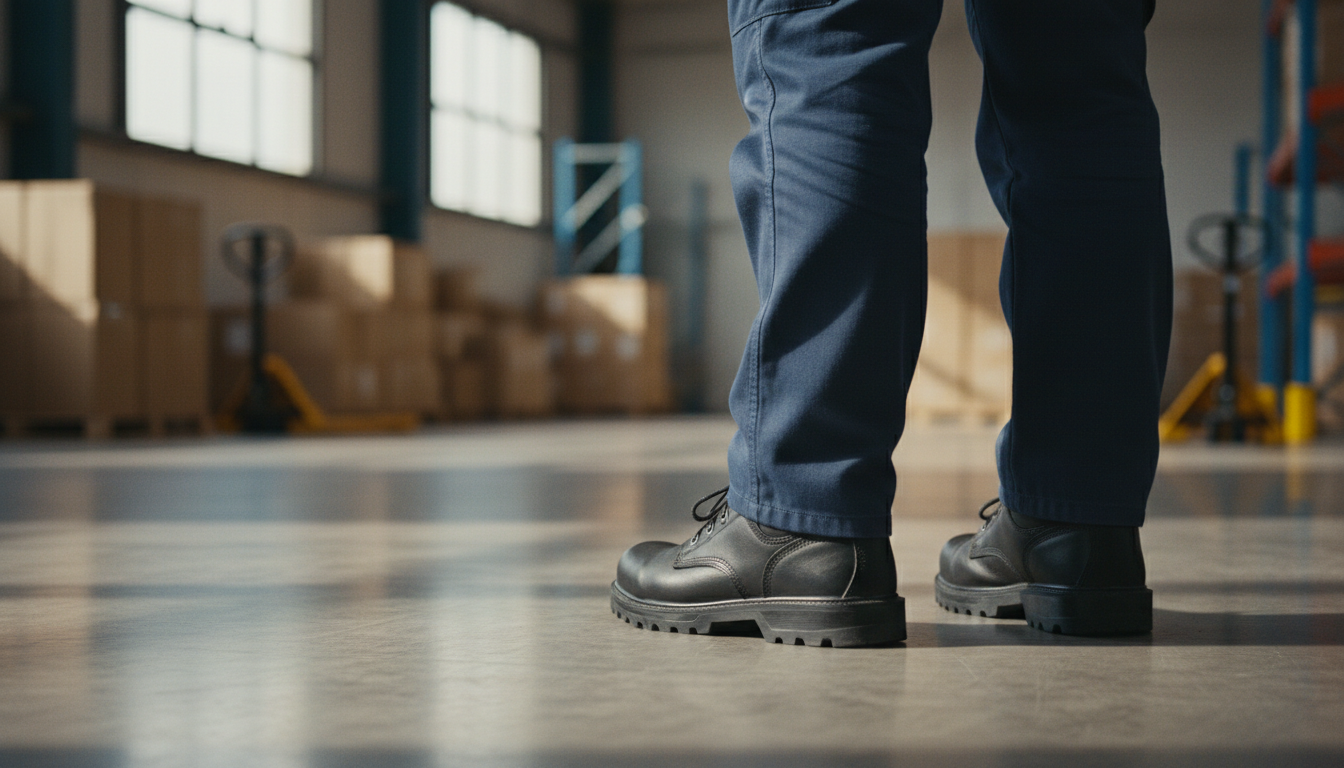
If you spend hours each day standing on concrete floors—whether at a warehouse, retail store, factory, or kitchen—you’re subjecting your body to forces that can dramatically alter your musculoskeletal health over time. The unforgiving nature of concrete surfaces creates a perfect storm of repetitive impact, inadequate shock absorption, and constant compression that affects everything from your feet to your spine. Understanding these changes is the first step toward protecting your body and preventing long-term damage.
Many workers dismiss early warning signs like mild foot discomfort or end-of-day fatigue as normal consequences of their job. However, the cumulative effect of standing on hard surfaces can lead to serious conditions including plantar fasciitis, flat feet pain, joint deterioration, and chronic lower back problems. This article explores the scientific reality of how concrete flooring impacts your body and what you can do to minimize the damage.
The Biomechanics of Standing on Hard Surfaces
When you stand on concrete, your body becomes a shock-absorbing system with limited cushioning. Unlike softer surfaces that distribute pressure and absorb impact, concrete offers zero give. Every micro-movement, weight shift, and adjustment sends force directly through your feet, up your legs, and into your spine. Your feet contain 26 bones, 33 joints, and over 100 muscles, tendons, and ligaments—all working overtime to compensate for the lack of surface cushioning.
The natural arch of your foot is designed to act as a spring mechanism, distributing body weight and absorbing shock. However, prolonged standing on concrete gradually fatigues these structures. The plantar fascia—a thick band of tissue running along the bottom of your foot—experiences constant tension. Over months and years, this can lead to inflammation, micro-tears, and the dreaded condition known as runner’s foot or plantar fasciitis, which ironically affects standing workers just as frequently as athletes.
Without proper support, your arches begin to collapse under constant pressure. This is particularly problematic for individuals with existing flat feet or those genetically predisposed to arch weakness. The result is a cascading effect: fallen arches change your gait, which alters knee alignment, which affects hip positioning, which ultimately impacts spinal curvature. A problem that starts in your feet never stays isolated to your feet.
How Flat Feet Pain Develops from Concrete Exposure
Flat feet pain doesn’t always start with flat feet. Many people develop acquired flatfoot deformity (also called adult-acquired flatfoot) specifically from occupational standing on hard surfaces. The condition progresses through recognizable stages that often go unnoticed until significant damage has occurred.
Initially, you might experience general foot fatigue—a dull ache that improves with rest. This is your body’s early warning system. As exposure continues, the posterior tibial tendon, which supports your arch, becomes inflamed and weakened. Stage two brings visible arch flattening and pain that persists even after rest. By stage three, the deformity becomes rigid, and pain may decrease not because the problem is better, but because damaged structures have lost sensitivity.
Workers who stand on concrete for 4-8 hours daily show measurably decreased arch height after just six months compared to control groups. This isn’t merely aesthetic—flat feet fundamentally alter how forces distribute through your body. The inward rolling motion (overpronation) that accompanies flat feet creates abnormal stress on ankles, knees, and hips, setting the stage for arthritis and joint damage decades down the road.
Joint Deterioration: The Hidden Cost of Hard Flooring
Your joints weren’t designed for the constant compression that concrete creates. When standing on hard surfaces for extended periods, the cartilage in your knees, hips, and ankles experiences continuous loading without adequate recovery time. Cartilage is avascular—it has no direct blood supply—so it relies on movement and pressure variation to pump nutrients in and waste products out.
Static standing on concrete creates the worst possible scenario: constant compression with minimal movement variation. This “nutritional starvation” of joint cartilage accelerates wear patterns. Studies of retail workers, nurses, and manufacturing employees show significantly higher rates of osteoarthritis in weight-bearing joints compared to workers who alternate between standing, sitting, and walking throughout their day.
The knees bear particularly heavy consequences. The patellofemoral joint (where your kneecap meets your thigh bone) experiences forces equivalent to 3-5 times your body weight during standing and small movements. On concrete, without shock absorption, these forces increase and become more concentrated. Over years, this leads to:
- Cartilage thinning and development of bone-on-bone contact
- Formation of bone spurs as the joint attempts to stabilize itself
- Chronic inflammation leading to stiffness and reduced range of motion
- Increased risk of meniscus tears and ligament strain
- Early onset osteoarthritis, sometimes appearing in workers in their 30s and 40s
Lower Back Pain: The Inevitable Consequence
Perhaps the most common complaint among concrete-standing workers is lower back pain. The connection isn’t coincidental—it’s biomechanical inevitability. When your feet hurt or your arches collapse, your body compensates by altering posture. These compensatory patterns create muscle imbalances, with some muscles overworking while others weaken.
Standing on concrete forces your lower back muscles (particularly the erector spinae group) to maintain constant contraction to keep you upright. Without the micro-relief that softer surfaces provide, these muscles fatigue and develop trigger points. The intervertebral discs in your lumbar spine experience constant compression, limiting nutrient flow and accelerating disc degeneration.
The postural changes from foot problems create a domino effect that often results in chronic lower back pain. Flat feet cause internal rotation of the legs, which tilts the pelvis forward (anterior pelvic tilt), which increases the lumbar curve (hyperlordosis), which places excessive pressure on the facet joints and discs of the lower spine. This chain reaction explains why addressing foot support is often the key to resolving back pain.
Circulatory and Muscular Effects
Beyond the skeletal system, prolonged standing on hard surfaces affects your circulation and muscles. The lack of movement causes blood to pool in your lower extremities—a condition called venous insufficiency. The calf muscles, which normally act as a “second heart” to pump blood back up to your core, don’t activate sufficiently during static standing.
This circulatory stagnation leads to several problems: swelling in the feet and ankles, varicose vein development, feelings of heaviness and fatigue, and increased risk of blood clots in severe cases. Workers often notice their shoes feel tighter at the end of a shift—a clear sign of edema caused by poor venous return.
Muscularly, static standing creates what researchers call “low-level continuous contraction.” Unlike dynamic movement where muscles contract and relax rhythmically, standing requires sustained partial contraction of postural muscles. This creates metabolic waste buildup, reduces oxygen delivery, and leads to the burning sensation many workers feel in their legs and feet. Over time, certain muscle groups become chronically tight while their antagonists weaken, creating imbalances that persist even during off-hours.
Protecting Your Body: Practical Solutions for Concrete Workers
The good news is that you can significantly reduce the damage concrete causes through strategic interventions. The most effective approach combines proper footwear, quality insoles, movement strategies, and body awareness. Here are evidence-based solutions that actually work:
- Invest in High-Quality Supportive Insoles: Generic shoe inserts won’t cut it. You need flat feet insoles or insoles specifically designed for arch support and shock absorption. For those seeking professional-grade protection, consider exploring advanced work comfort insoles designed specifically for hard surface standing, which offer targeted arch support and multi-layer cushioning technology that can make a measurable difference in daily comfort and long-term joint health.
- Choose Proper Footwear: Your shoes should have a wide toe box, substantial midsole cushioning, and built-in arch support. Many workers find success with brands offering removable insoles, allowing them to insert custom orthotics. If you’re wondering about hey dude insoles or other popular brands, remember that while these casual shoes offer comfort, they often lack the structured support needed for concrete standing jobs.
- Use Anti-Fatigue Mats: If possible, stand on anti-fatigue matting. These mats provide the cushioning that concrete lacks, reducing joint stress by 20-30% according to ergonomic studies. Even a small mat at your primary standing station helps.
- Implement Movement Breaks: Static standing is more damaging than walking. Take micro-breaks every 30 minutes to walk, stretch, or shift positions. Simple calf raises, foot rolls, and weight shifting reduce circulatory stagnation and give muscles brief recovery periods.
- Address Arch Support Needs Specifically: Women especially should seek out arch support slippers for women to wear during break times and after work. This allows your feet to recover in a supported position rather than going to the opposite extreme of flat, unsupportive footwear during rest periods.
- Strengthen Supporting Muscles: Exercises that strengthen your feet, ankles, calves, and core help your body better withstand concrete’s demands. Toe curls, arch lifts, single-leg balancing, and planks build the muscular support system that protects your joints.
Special Considerations for Different Foot Types
Not all feet respond to concrete the same way. If you have high arches, you need cushioning to compensate for your foot’s reduced natural shock absorption. If you have flat feet, you need structured support to prevent further collapse. Many people fall somewhere in between—a neutral arch that’s at risk of flattening over time without proper support.
For those dealing with specific conditions like runner’s foot (plantar fasciitis), morning pain is often the telltale sign. That first step out of bed that causes sharp heel pain indicates inflammation of the plantar fascia. This condition responds well to proper arch support, night splints, and gradual strengthening—but it requires consistency. Simply wearing supportive insoles during work hours can reduce symptoms by 60-70% within weeks.
If you’re using insoles for sneakers too big to achieve better fit, be cautious. While insoles can take up extra space, shoes that are too large create instability and don’t provide proper heel support. It’s better to find properly fitting footwear and add quality insoles designed for support rather than just gap-filling.
Conclusion: Your Body’s Future Depends on Today’s Choices
Standing on concrete changes your body gradually but profoundly. The effects accumulate silently—day by day, shift by shift—until minor discomfort becomes chronic pain and temporary fatigue becomes permanent structural damage. From collapsing arches and flat feet pain to deteriorating knee cartilage and chronic lower back problems, the consequences of ignoring hard surface impact are serious and long-lasting.
However, you’re not powerless against these changes. By understanding the biomechanics at work and implementing strategic protective measures—particularly proper footwear with quality supportive insoles—you can dramatically reduce the damage. Your feet are literally your foundation; supporting them properly supports everything above them.
The investment you make in proper foot support today will pay dividends in mobility, comfort, and quality of life for decades to come. Don’t wait until pain becomes debilitating. Address the concrete challenge proactively, and your body will thank you not just tomorrow, but twenty years from now when your peers are struggling with joint replacements and chronic pain while you’re still moving comfortably and freely.