
Why Uneven and Debris-Filled Ground Dramatically Increases Workplace Injury Risk: The Case for Puncture Resistant Insoles
February 17, 2026
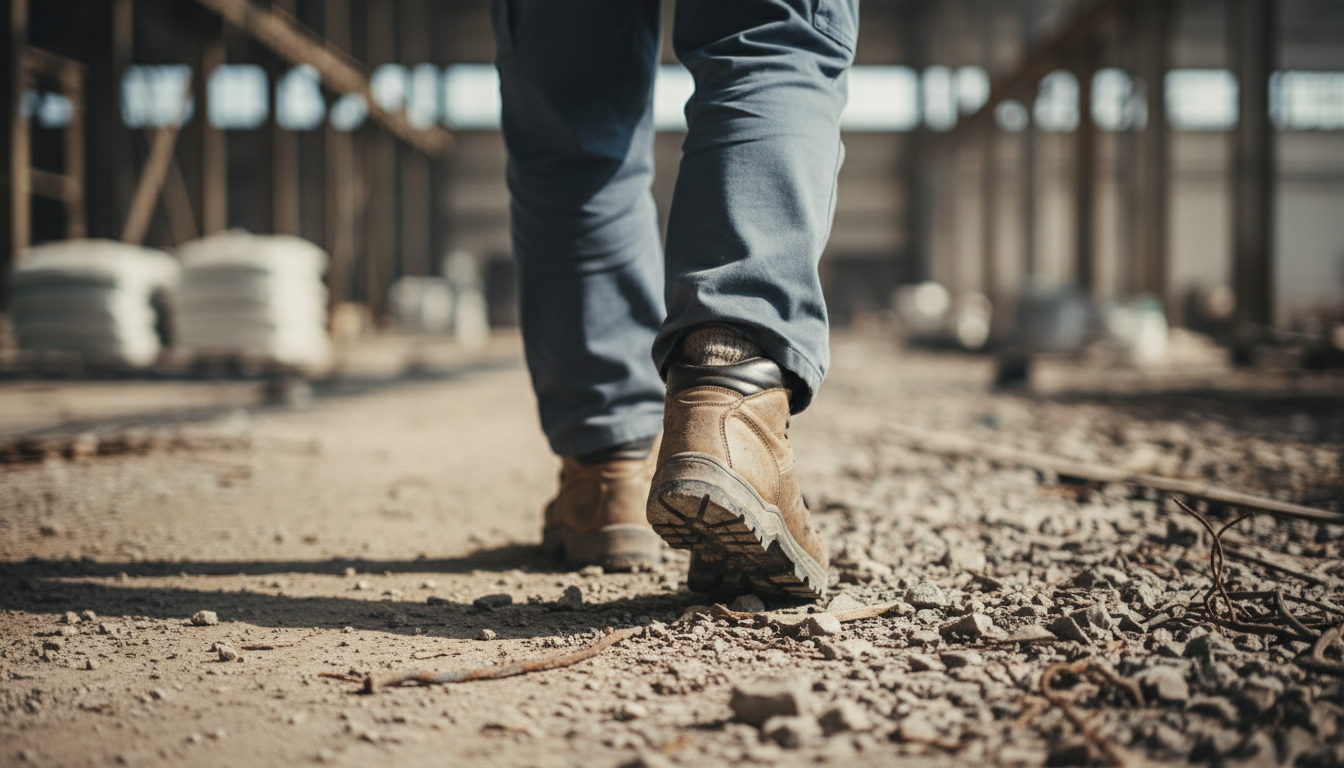
Workplace safety is a critical concern across industries, yet one of the most overlooked hazards remains literally beneath our feet. Uneven surfaces and debris-filled grounds pose significant risks to workers daily, contributing to thousands of preventable injuries each year. From construction sites to warehouses, manufacturing floors to outdoor work environments, the terrain we traverse can become a silent threat to our wellbeing.
The statistics tell a compelling story. According to recent occupational safety data, slips, trips, and falls account for approximately 27% of all workplace injuries, with uneven and debris-laden surfaces being primary contributors. Even more concerning, puncture wounds from sharp objects hidden in debris cause over 8,000 serious workplace injuries annually, leading to millions in lost productivity and workers’ compensation claims.
This article explores how unstable and cluttered surfaces strain feet and elevate injury risks in workplace settings. More importantly, we’ll examine practical solutions—including advanced protective gear like puncture resistant insoles—that can significantly reduce these hazards. Understanding these risks and implementing proper protection isn’t just about compliance; it’s about preserving worker health and organizational productivity.
The Hidden Dangers of Uneven Terrain in Workplace Environments
Uneven ground creates a multifaceted threat to worker safety that extends beyond the obvious risk of tripping. When walking on irregular surfaces, the human foot must constantly adjust, causing micro-adjustments in the ankle, knee, and hip joints. This continuous compensation mechanism leads to muscle fatigue and joint strain over time, even without an acute injury event.
The biomechanics of walking on uneven surfaces reveal why these environments are so taxing. On flat, predictable ground, our gait follows a natural rhythm where weight transfers efficiently from heel to toe. On uneven terrain, this pattern is disrupted, forcing the foot to land at unpredictable angles. The result is excessive pressure on specific areas of the foot, creating “hot spots” for potential injury.
Construction workers experience this phenomenon daily. A study in the Journal of Occupational Safety found that construction personnel walking on uneven ground experienced up to 45% more pressure on their feet compared to those on level surfaces. This increased pressure manifests in multiple ways:
- Accelerated foot fatigue leading to compromised balance
- Increased strain on ankle ligaments and tendons
- Greater stress on the plantar fascia, potentially causing plantar fasciitis
- Elevated risk of stress fractures in the metatarsals
- Compensatory posture changes that affect spinal alignment
Furthermore, uneven ground doesn’t just impact the feet. The entire musculoskeletal system experiences a domino effect of compensation, often resulting in back pain, knee issues, and hip discomfort. Workers in industries that require regular navigation of uneven terrain report 37% more musculoskeletal disorders than those in similar roles on level surfaces.
Debris-Filled Ground: A Puncture Risk Hiding in Plain Sight
While uneven terrain poses significant biomechanical challenges, debris-filled ground introduces an entirely different category of risk: penetration injuries. Construction sites, renovation areas, and industrial zones frequently contain nails, screws, metal shards, glass, and other sharp objects that can penetrate standard work footwear.
The danger of debris is compounded by its often-camouflaged nature. A nail partially buried in sawdust or a metal shard hidden in gravel becomes virtually invisible until it’s too late. Even vigilant workers can miss these hazards during normal work activities, especially in low-light conditions or when focused on complex tasks.
Puncture injuries from ground debris typically follow this progression:
- Initial penetration through the outsole of standard work footwear
- Penetration of the foot’s plantar surface, often in the arch or heel
- Introduction of bacteria and contaminants into the wound
- Development of infection if not promptly and properly treated
- Potential for long-term complications including nerve damage
These injuries aren’t merely painful—they’re costly and disruptive. A single puncture wound can result in weeks of restricted duty or absence, tetanus shots, antibiotic treatments, and in severe cases, surgical intervention. For employers, this translates to reduced productivity, increased insurance premiums, and potential OSHA scrutiny.
The most effective defense against these hidden threats is protective footwear enhanced with steel toe inserts or puncture resistant insoles. These specialized products create a critical barrier between hazardous debris and vulnerable feet.
The Biomechanical Impact: How Unstable Surfaces Strain Your Feet
The human foot is a marvel of evolutionary design, containing 26 bones, 33 joints, and over 100 muscles, tendons, and ligaments. This complex structure is optimized for walking on relatively flat, predictable surfaces. When forced to navigate unstable ground, the foot’s natural mechanics become compromised in ways that significantly increase injury risk.
On unstable surfaces, the foot’s intrinsic muscles work overtime to maintain balance. The small muscles between the metatarsals and those controlling the toes engage continuously rather than cyclically, leading to premature fatigue. When these stabilizing muscles tire, the foot becomes increasingly reliant on passive structures like ligaments and joint capsules for stability—structures not designed for continuous loading.
This overreliance on passive stabilizers creates a cascade of biomechanical issues:
- Reduced proprioception (the body’s sense of position in space)
- Compromised arch support leading to excessive pronation
- Irregular pressure distribution across the plantar surface
- Heightened impact forces transmitted to the ankle and knee
- Compensatory movement patterns that affect the entire kinetic chain
Workers who spend hours on unstable surfaces often develop adaptive movement patterns that, while seemingly protective in the short term, can lead to chronic issues. The body begins to favor certain muscle groups while neglecting others, creating muscular imbalances that persist even when on stable ground.
Adding steel toe inserts for shoes or specialized protective insoles provides dual benefits in these environments. Beyond protecting against punctures, quality insoles offer enhanced structural support that helps maintain proper foot biomechanics even on challenging surfaces. This additional support reduces fatigue and helps prevent the compensatory movement patterns that lead to chronic injuries.
The Compounding Effect: When Fatigue Meets Hazardous Terrain
As a workday progresses, physical and mental fatigue naturally accumulate. This fatigue creates a dangerous synergy with uneven, debris-filled environments, dramatically increasing injury risk. Understanding this relationship is crucial for workplace safety planning and personal protection strategies.
Studies in occupational ergonomics have demonstrated that a worker’s ability to safely navigate hazardous terrain decreases measurably as the workday progresses. After six hours on shift, reaction times slow by approximately 12%, while the precision of foot placement decreases by up to 23%. These cognitive and physical declines directly impact a worker’s capacity to avoid hazards.
The fatigue-hazard relationship creates a concerning pattern where:
- Perception of ground hazards diminishes as visual focus narrows
- Mental processing of terrain variations slows
- Physical response to detected hazards becomes less precise
- Recovery from minor missteps becomes more difficult
- Judgment about risky shortcuts becomes compromised
This pattern explains why workplace injuries often cluster in the latter portions of shifts, particularly in environments with variable terrain and hidden hazards. As fatigue increases, the body’s natural protective mechanisms become less effective precisely when they’re most needed.
Protective gear becomes even more crucial in this context. Nail proof insoles and other protective footwear technologies provide consistent protection regardless of a worker’s fatigue level. They create a reliable safety buffer that compensates for the natural decline in hazard avoidance capacity that occurs throughout the workday.
Beyond Basic PPE: The Role of Advanced Foot Protection
Standard work boots provide a baseline of protection, but they often fall short when confronting the combined challenges of uneven terrain and hidden debris. This protection gap has driven innovation in specialized footwear accessories designed specifically to address these workplace hazards.
Modern puncture resistant insoles represent a significant advancement over traditional foot protection. Unlike the rigid steel plates of earlier designs, today’s technologies utilize advanced composites and specialized weaving techniques to create flexible barriers that stop penetrating objects without compromising comfort or natural foot movement.
The evolution of these protective technologies has yielded products with multiple protective layers:
- Outer layer designed for durability and contact with the boot interior
- Middle layer incorporating puncture-resistant materials (often aramid fibers or specialized composites)
- Inner layer focused on comfort and moisture management
- Anatomical design elements that maintain proper foot biomechanics
- Strategic flexibility zones that preserve natural gait patterns
The most effective steel insoles find the optimal balance between protection and functionality. Unlike afterthought additions to safety programs, these products are engineered specifically to address the dual challenges of unstable surfaces and penetration hazards.
CRUVHEAL has emerged as an industry leader in this specialized protective category, developing puncture resistant insoles with advanced multi-layer protection technology that has been independently tested to withstand up to 1,200 Newtons of penetration force. These insoles integrate seamlessly into existing work footwear, providing critical protection without requiring complete replacement of familiar boots.
Implementation Strategies: Creating a Safer Work Environment
Addressing the hazards of uneven and debris-filled ground requires a comprehensive approach that combines environmental management with personal protective equipment. Effective workplace safety strategies should incorporate multiple layers of protection to minimize injury risk.
Environmental controls represent the first line of defense. These include regular worksite cleaning schedules, designated debris collection points, and systematic inspection protocols for identifying and addressing ground hazards. Simple practices like requiring daily workspace cleanup can significantly reduce the prevalence of sharp objects in walking areas.
For areas where uneven ground is unavoidable, consider these proven strategies:
- Creating designated walkways with improved surface conditions
- Installing temporary flooring or matting in high-traffic zones
- Improving lighting to enhance visibility of ground hazards
- Implementing color-coding systems to highlight elevation changes
- Establishing clear procedures for reporting and addressing hazardous terrain
Even with these environmental controls, personal protective equipment remains essential. A comprehensive foot protection program should include:
- Quality work boots with appropriate ankle support
- High-performance puncture resistant insoles like those from CRUVHEAL
- Regular inspection and replacement schedules for worn protective equipment
- Training on proper fitting and use of protective footwear
- Clear communication about the specific hazards present in work areas
Organizations that implement these multi-faceted protection strategies typically see dramatic reductions in foot-related workplace injuries. The investment in quality protective equipment like steel toe inserts for shoes yields substantial returns through reduced workers’ compensation claims, decreased absenteeism, and improved productivity.
The Economic Case for Advanced Foot Protection
Beyond the human cost of workplace foot injuries, the financial implications for employers are substantial. Analyzing the economics of foot protection reveals why investment in quality protective solutions like puncture resistant insoles makes sound business sense.
According to the Bureau of Labor Statistics, the average direct cost of a workplace foot injury exceeds $9,600, while indirect costs (including lost productivity, replacement training, and administrative expenses) typically multiply this figure by 3-5 times. For penetration injuries that become infected, costs can escalate dramatically, sometimes exceeding $30,000 per incident.
Comparing these potential losses against the relatively modest investment in quality protection equipment reveals a compelling cost-benefit ratio. Premium steel toe inserts and protective insoles typically cost between $30-70 per pair, with a service life of 6-12 months depending on work conditions. Even at the high end of this range, the protection cost averages less than $0.40 per workday—a minimal expense compared to the potential costs of an injury.
Forward-thinking organizations recognize this economic reality and are increasingly treating protective equipment not as an expense but as an investment with measurable returns. Companies that have implemented comprehensive foot protection programs incorporating nail proof insoles report average reductions in foot-related injuries of 67-84%, translating to substantial cost savings.
The CRUVHEAL puncture resistant insoles represent an excellent example of this value proposition, offering industrial-grade protection at a price point that makes economic sense for both employers and individual workers investing in their own safety. With their specialized multi-layer construction, these insoles provide protection against the specific hazards posed by debris-filled work environments.
Conclusion: Prioritizing Protection in Variable Terrain
The evidence is clear: uneven and debris-filled ground significantly increases workplace injury risk through multiple mechanisms. From the biomechanical strain of navigating irregular surfaces to the acute danger of penetration injuries from hidden sharp objects, these environmental hazards demand serious attention in workplace safety planning.
Workers and safety managers must recognize that standard footwear often falls short in these challenging environments. The addition of specialized protective equipment—particularly high-quality puncture resistant insoles and steel toe inserts—creates a critical safety buffer against these persistent hazards.
The most effective approach combines environmental management with personal protection. While efforts should continue to improve work surfaces and remove debris where possible, the reality of many industries means that some level of terrain hazard will remain. In these environments, proper protective equipment becomes essential rather than optional.
For those working in construction, manufacturing, warehousing, and similar high-risk environments, investing in premium protective solutions like CRUVHEAL’s puncture resistant insoles represents a practical step toward greater workplace safety. These specialized products address the specific challenges of uneven, debris-filled environments without compromising comfort or natural movement.
Ultimately, the goal is simple: every worker deserves to return home safely at the end of each shift. By understanding the specific hazards posed by challenging terrain and implementing appropriate protective measures, we can significantly reduce the incidence and severity of workplace foot injuries. Whether you’re a safety professional responsible for an entire workforce or an individual worker concerned about personal protection, addressing the risks of uneven and debris-filled ground should be a top priority.