
Why Workers on Hard Floors Experience Faster Joint Fatigue: The Essential Guide to Work Boot Insoles for Men
January 31, 2026
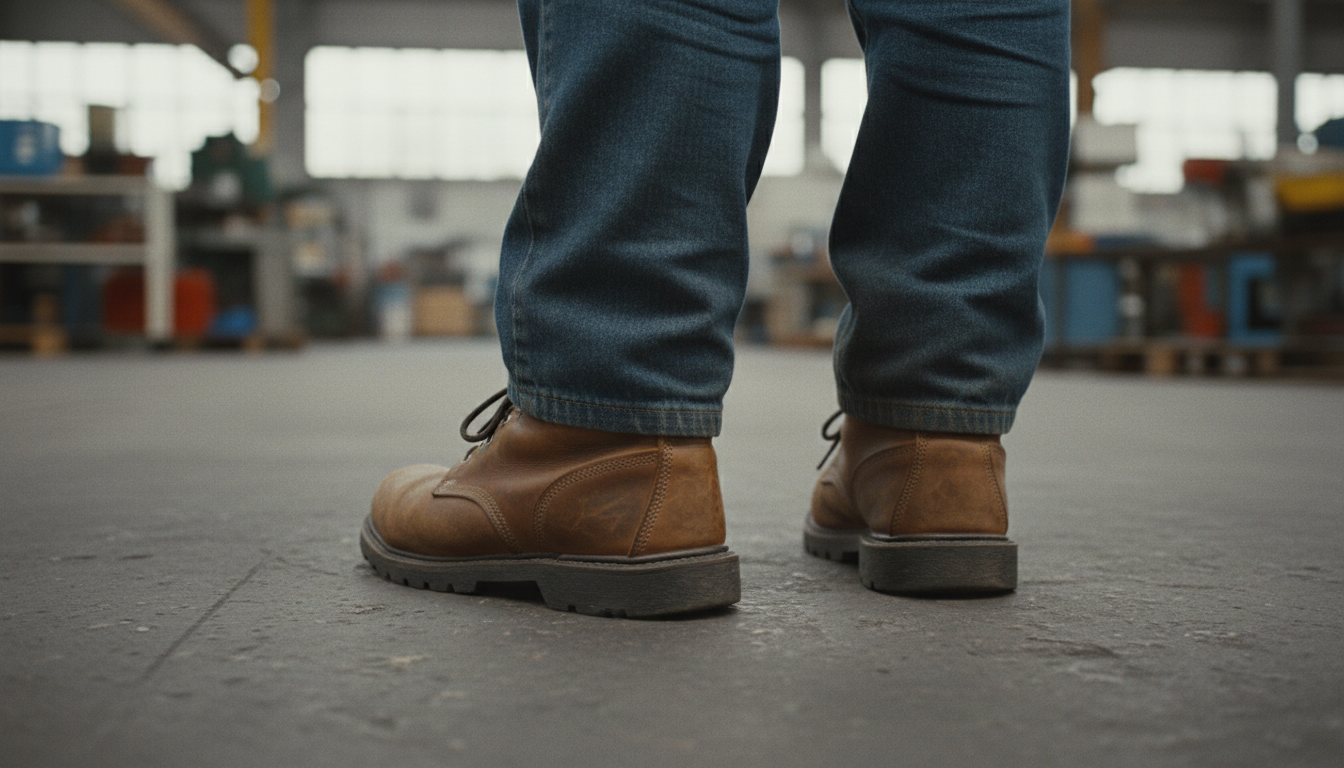
If you spend your workday on concrete, tile, or other unforgiving surfaces, you’re likely familiar with that unique brand of exhaustion that sets in by day’s end. That bone-deep fatigue isn’t just in your mind—it’s your body’s response to the relentless stress of standing on hard floors. For millions of workers across construction, manufacturing, healthcare, retail, and other industries, this daily grind takes a serious toll on feet, knees, hips, and even the lower back.
The consequences go beyond mere discomfort. Over time, the cumulative impact of working on hard surfaces can lead to chronic pain, reduced mobility, and potentially career-limiting injuries. Yet many workers consider this pain simply “part of the job”—an unavoidable occupational hazard.
In this comprehensive guide, we’ll explore the science behind why hard floors are so demanding on your body, the long-term implications for your joint health, and most importantly, how proper support through quality work boot insoles for men can make a dramatic difference in your comfort, endurance, and long-term wellbeing.
The Science of Standing: How Hard Floors Impact Your Joints
To understand why hard floors cause such pronounced fatigue, we need to explore how the human body responds to standing on unforgiving surfaces. Our bodies evolved to walk and stand on varied natural terrain—soil, grass, sand—not the consistently hard surfaces that dominate our modern work environments.
When you stand on concrete or tile, your feet cannot sink in even slightly as they would on natural ground. This creates a critical problem: impact forces cannot be properly absorbed and distributed. Every step sends shockwaves up through your skeletal system, with each impact being approximately 1.5 to 2 times your body weight.
Research from occupational health studies reveals that standing on hard surfaces for extended periods causes:
- Compression of soft tissues in the feet, restricting blood flow
- Increased pressure on joint cartilage, particularly in the knees and hips
- Excessive strain on the arches of the feet
- Altered biomechanics as your body attempts to compensate for discomfort
- Accelerated muscle fatigue in stabilizing muscles
The human foot contains 26 bones, 33 joints, and over 100 muscles, tendons, and ligaments—a complex system designed to flex and adapt to terrain. On hard floors, this natural shock-absorbing mechanism becomes overwhelmed, forcing your body to find other ways to dampen these forces.
The Domino Effect: From Foot Fatigue to Full-Body Pain
What begins as simple foot discomfort rarely stays confined to the feet. The human body functions as an interconnected system, meaning issues that start in the feet tend to migrate upward, creating a cascade of problems throughout your body. This “domino effect” explains why many workers experience pain in seemingly unrelated areas.
Here’s how this progression typically unfolds for workers spending 8+ hours on hard surfaces:
- Initial foot fatigue – Muscles in the feet become overtaxed from constant contractions needed for stability
- Altered gait – To avoid pain, workers shift their walking and standing posture
- Knee strain – Changed biomechanics place abnormal stress on knee joints
- Hip misalignment – The body shifts weight distribution to compensate
- Lower back tension – Altered posture creates imbalances in the lumbar region
- Upper back and neck compensation – The entire posture begins to shift to maintain balance
Dr. James Irvine, an occupational health specialist, notes: “Many workers attribute their back pain to lifting or other obvious strains, but often it’s the cumulative impact of standing on concrete day after day that creates the underlying vulnerability. Proper foot support can prevent this entire chain reaction.”
This explains why investing in quality insoles for men who work on hard surfaces is not merely about foot comfort—it’s about protecting your entire musculoskeletal system.
Long-Term Consequences of Hard Floor Exposure
The human body has remarkable adaptive capabilities, but this adaptation isn’t always beneficial. Over months and years of hard floor exposure, temporary discomfort can evolve into chronic conditions that are difficult to reverse. Understanding these potential long-term effects is crucial for workers to take preventive action.
Regular exposure to hard surfaces without proper support can contribute to:
Plantar Fasciitis – Inflammation of the thick band of tissue that connects your heel to your toes, resulting in stabbing heel pain that’s particularly acute during your first steps in the morning.
Osteoarthritis – Premature breakdown of joint cartilage, particularly in the knees and hips, leading to stiffness, pain, and reduced range of motion.
Metatarsalgia – Pain and inflammation in the ball of the foot, often described as feeling like you’re constantly walking with a pebble in your shoe.
Pronation Issues – Excessive inward rolling of the foot during walking, which disrupts proper weight distribution and stresses the arch and ankle.
Chronic Lower Back Pain – Persistent lumbar discomfort resulting from altered biomechanics and posture compensation.
A 2024 study in the Journal of Occupational Ergonomics found that workers who spent more than 70% of their shifts standing on concrete surfaces were 4.2 times more likely to develop chronic joint issues by age 50 compared to those with similar jobs on more forgiving surfaces or with proper supportive equipment.
The Crucial Role of Work Boot Insoles for Men
Standard work boots, even high-quality ones, rarely provide sufficient cushioning and support for extended periods on hard floors. The factory insoles that come with most work boots are designed to be one-size-fits-all and often compress within weeks of regular use.
Quality work boot insole replacements serve multiple critical functions that factory insoles cannot match:
- Shock absorption that significantly reduces impact forces
- Arch support tailored to your foot’s natural contours
- Weight distribution that prevents pressure points
- Stability that reduces muscle fatigue from constant stabilization efforts
- Moisture management to prevent skin issues and increase comfort
When selecting insoles men work boots need for hard floor environments, the material composition makes a substantial difference in performance. Advanced materials like high-density foams, gel composites, and memory foam with rebound technology provide superior support compared to basic foam inserts.
The CRUVHEAL Work Comfort Orthotic Insoles exemplify this advanced approach, with multi-layer construction specifically engineered for workers who spend hours on hard surfaces. These premium shoe inserts men need feature deep heel cups for stability, arch support for proper alignment, and shock-absorbing materials that maintain their resilience throughout a full workday.
Key Features to Look For in Work Boot Insoles
Not all insoles are created equal, and the specific demands of working on hard surfaces require particular features. When selecting insoles men should prioritize for industrial environments, consider these essential characteristics:
- Shock absorption capacity – The primary function needed to counteract concrete’s unforgiving nature
- Arch support profile – Should match your foot’s natural arch (low, medium, or high)
- Material durability – Will the insole maintain its supportive properties under your body weight for 8+ hours daily?
- Heel cup design – Deep heel cups provide stability and help with proper alignment
- Weight capacity rating – Heavier individuals need insoles specifically rated for their weight class
- Breathability – Particularly important for hot work environments or those prone to foot perspiration
Professionals in different industries may need to prioritize different features. For example, construction workers might prioritize maximum shock absorption, while healthcare professionals might focus on all-day comfort and weight distribution for stationary standing.
Another consideration is boot fit. Adding a substantial work boot insole can change how your boot fits. Some workers find they need to remove the factory insole first, while others may need to consider sizing up in future boot purchases to accommodate quality insoles.
Implementation Strategies: Beyond Just Inserting Insoles
While quality insoles for men are a critical foundation for joint protection, a comprehensive approach to managing hard floor fatigue should incorporate additional strategies. The most effective protection comes from combining proper footwear solutions with workplace habits and environmental modifications.
Consider these complementary approaches to maximize joint protection:
Rotation of footwear – Having two pairs of work boots with different support characteristics can allow tissues to recover and adapt differently. This practice is common among serious runners and can be equally beneficial for industrial workers.
Microbreaks with movement – Even brief periods of walking or simple foot exercises every hour can restore circulation and relieve pressure on compressed tissues. Set a timer as a reminder.
Gradual adaptation – When introducing new shoe inserts men should expect an adjustment period. Wear new insoles for increasing intervals rather than immediately for a full shift.
Anti-fatigue matting – When possible, advocate for anti-fatigue mats in stationary work areas. These can work in conjunction with good insoles to further reduce impact stress.
Post-work recovery – Practices like foot soaks, elevation, and targeted stretching can speed recovery and reduce cumulative damage.
James Montgomery, a 15-year construction veteran, shares: “I went through years of thinking knee and back pain was just part of getting older in this job. When I finally got serious about proper insoles and started doing simple stretches during breaks, the difference was night and day. I wish I’d started twenty years earlier.”
The Economic Argument: Investment vs. Cost
When discussing quality work boot insoles for men, the price point sometimes causes hesitation. Premium insoles typically range from $30 to $60, which can seem significant compared to basic $10 drugstore options. However, viewing this purchase as an economic decision rather than just an expense reveals the true value.
Consider these financial factors:
- A single day of missed work due to foot, knee, or back pain often costs more in lost wages than quality insoles
- Medical treatment for conditions like plantar fasciitis typically costs hundreds or thousands of dollars
- Premium insoles generally last 6-12 months of daily wear, amounting to pennies per workday
- Reduced fatigue can lead to higher productivity and potentially increased earnings
- Prevention is invariably less expensive than treatment for chronic conditions
Beyond the direct financial calculation, there’s the incalculable value of comfort, mobility, and being able to enjoy activities outside of work without pain or limitations. Many workers report that proper foot support allows them to have energy for family activities after work rather than needing to recover from their workday.
Conclusion: Protecting Your Most Valuable Work Assets
Your joints are irreplaceable assets that directly impact both your current quality of life and your future mobility. The cumulative impact of working on hard floors creates a significant but often underestimated risk to these precious resources. While standing on concrete, tile, and other hard surfaces may be an unavoidable aspect of many professions, the resulting joint fatigue and potential damage is largely preventable.
Quality insoles men work boots need represent one of the most accessible, effective interventions available to protect against these occupational hazards. By understanding the science behind hard floor fatigue and implementing appropriate supportive measures, workers can significantly reduce their risk of both immediate discomfort and long-term damage.
Investing in proper foot support through high-performance insoles like CRUVHEAL Work Comfort Orthotic Insoles isn’t merely a comfort consideration—it’s a crucial protective measure for your entire musculoskeletal system. Your future self will thank you for the preventative steps you take today.
Remember: in occupations that demand long hours on unforgiving surfaces, what stands between your joints and concrete makes all the difference. Choose wisely, and stand strong.